Moral debt and atonement
Far from the Madding CrowdMoral debt and atonement in Far from the Madding Crowd take shape as attempts to answer for injuries that cannot simply be undone. Sergeant Troy spends his remaining money on a costly tomb and tends Fanny Robin’s grave in a remorseful reaction to his earlier indifference; Bathsheba Everdene, meanwhile, considers promising herself to Boldwood because she believes she wronged him and fears that refusing him may destroy him. Neither act restores what has been lost. Together, they expose the difference between acknowledging responsibility and imagining that an extravagant gesture or a coerced promise can settle the human consequences of past conduct.
Two responses to guilt
Troy’s remorse arrives after Fanny’s death, when the image of her returns to him alongside Bathsheba’s reproaches. He has just kept a vow not to bet at the Budmouth races, spending only a few shillings, but on the journey home he recognizes that Fanny may truly have been prevented by illness from keeping her promise. He regrets not making inquiries in Casterbridge. At dawn he leaves the house by the back door, almost oblivious to Bathsheba, and goes first to the churchyard, where he finds the vacant grave dug for Fanny the day before. He marks its position, then hurries to Casterbridge, stopping at the place where he last saw her alive. His new attention to her comes too late to change the circumstances that led to her death.
At the stone-mason’s yard, Troy behaves, in the narrator’s account, like a man inexperienced in ordinary calculation: he cannot bring himself to economize, and wants the best tomb he can obtain immediately. He spends all the money he possesses—twenty-seven pounds—on a headstone, footstone, and marble enclosure, with the name, delivery to Weatherbury, and erection included. The amount matters because it makes his effort both concrete and disproportionate: he devotes his entire remaining cash to a memorial, not to any action that could reach Fanny herself. His urgent purchase turns remorse into expenditure, as if costly permanence could answer a loss that cannot be reversed.
A grave made into a memorial
Troy returns to Weatherbury Churchyard at about ten at night, with the tomb already erected over the grave he marked that morning. He brings a heavy basket, a spade, and a lantern. After reading the inscription by the lantern’s light, he sets out an elaborate succession of flowers intended to bloom through the year. Snowdrops go in a line outside the marble coping; crocuses and hyacinths are arranged in rows; summer flowers are placed at Fanny’s head and feet, lilies and forget-me-nots over her heart, and the remaining plants distributed through the grave’s enclosure. The ordered planting gives his grief a task and a calendar, but it cannot give Fanny a future. Its care is directed toward a body and a name after the living person has been lost.
The scene makes the distance between feeling and reparation visible. Troy works with an impassive face, without recognizing what the narrator describes as the futility of these romantic actions or their excess. Rain enters the lantern and puts out its candle before he can finish. Tired and facing a dark, wet night, he leaves the work for daylight and falls asleep on a bench in the church porch. The interruption does not resolve his remorse; it leaves the act unfinished, a vigil without an answer. His elaborate flowers are a genuine expression of belated attention, yet the grave preserves the fact that his attention came only after he could no longer help Fanny.
Bathsheba’s debt to Boldwood
Bathsheba’s sense of obligation has a different origin. Years after her earlier thoughtless conduct helped make Boldwood desire marriage with her, she recognizes that he has continued to suffer. During a moonlit drive, Boldwood recalls the moment when he carried her fainting into the King’s Arms in Casterbridge and says that he had once been something to her before Sergeant Troy was anything. Bathsheba tells him that she did like and respect him, regrets her treatment of him, and says she would gladly have made amends if she could have done so. Her regret is real, but it does not mean that she loves him or wishes to marry him.
The legal and emotional uncertainty surrounding Troy sharpens the dilemma. His death has not been absolutely proved, and Bathsheba says that she may not truly be a widow. Boldwood nevertheless presses her to consider marriage after six years, the waiting period she understands to apply when a missing husband has not returned. Bathsheba initially resists; she says she has not seriously considered marrying again, does not want another husband, and fears that agreeing would be improper while Troy might still be alive. Boldwood presents the proposal as a future compact rather than an immediate marriage, but the long interval does not remove the pressure he places on her in the present.
When Bathsheba confides in Gabriel Oak while they audit accounts, she explains that she believes Boldwood’s future may depend on her treatment of him. She fears that refusing to give her word will make him lose his mind. Oak remembers that Boldwood’s life has seemed blank whenever he has not been hoping for her, but he doubts that Bathsheba bears the full responsibility she imagines. Asked for his moral judgment, Oak distinguishes a cold promise made out of obligation from a marriage undertaken without honest love: for him, the deeper wrong would be wedding a man she does not truly love. Bathsheba, however, frames the issue as a debt she must pay. She compares her responsibility to an inconvenient debt that remains owed, and says she would accept the penalty of marrying without love because she once injured Boldwood in sheer idleness.
The promise and its limits
The later encounter at Boldwood’s Christmas gathering turns Bathsheba’s abstract moral accounting into an act of submission. She has meant to stay only about an hour and leave without taking part in the festivities. When Boldwood finds her alone in the small parlour, he asks for the promise she has delayed. Bathsheba says she is changed and unhappy, and that she has no feeling in the matter; still, she believes she owes him something if he demands it. Her uncertainty is not consent freely given with affection. She asks to consult a solicitor because Troy’s death remains doubtful and she fears doing wrong, while Boldwood urges her to say the words and invokes his long suffering and love.
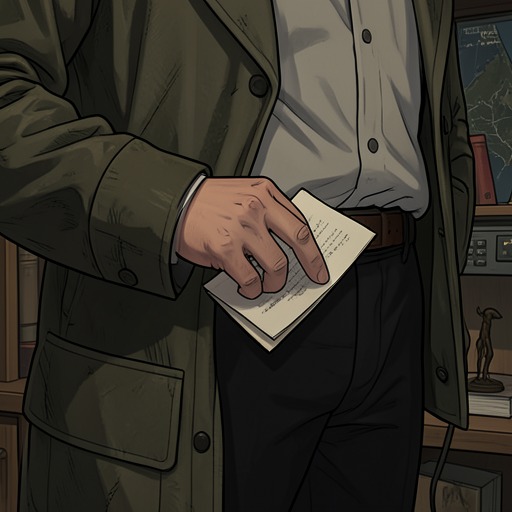
Agitated and crying, Bathsheba finally promises that, if Troy does not return and both she and Boldwood are alive, she will marry him in six years. Boldwood places a ring on her finger despite her protest that she cannot wear it and does not want anyone to know of an engagement. He calls it a pledge and a practical compact; she agrees to wear it that night because he presses her to do so. The scene reveals the moral danger in treating marriage as compensation: Boldwood recasts an emotional bond as a debt due, while Bathsheba accepts a future commitment under distress, without love, and under uncertainty about her existing marriage.
The book’s parallel acts of atonement therefore remain unequal but connected. Troy’s spending and planting honor Fanny after death, yet cannot repair his earlier failure to attend to her when she was alive. Bathsheba’s promise acknowledges the injury she believes she inflicted on Boldwood, yet cannot make affection an obligation or guarantee his future. In both cases, remorse seeks an outward form—a marble tomb and flowers, or a ring and a delayed wedding promise. The forms give guilt something tangible to do, but they also expose its limit: responsibility can be recognized and care can be offered, while the past and another person’s feelings remain beyond anyone’s power to settle.